
China order fulfillment: what it is, how it works, and how to choose the right partner

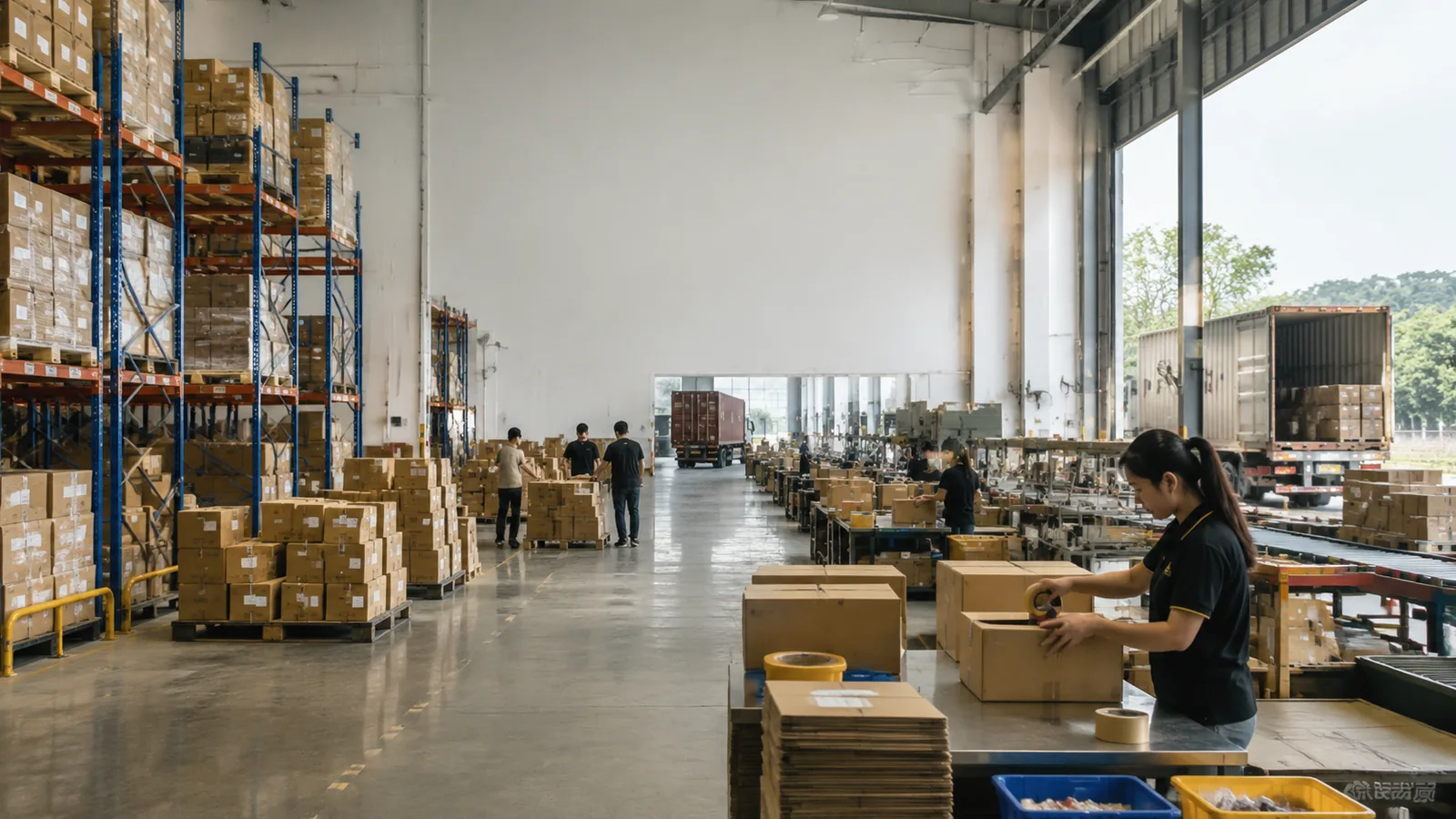
China order fulfillment is the process of preparing and shipping products from China to customers in other markets. A local partner receives goods from Chinese suppliers, checks and stores them, then packs each order and ships it to the customer’s destination.
This keeps the work close to the source while the customer receives the order in their own market. A brand does not need to manage suppliers, warehouses, and shipping companies on its own.
The right setup can support more than dropshipping. It can handle single-order buying, stored stock, branded packaging, and orders from several sales channels.
This guide explains how the process works. It also shows which model fits each stage of growth and what to check before choosing a partner.
Table of contents
- What is China order fulfillment?
- How China order fulfillment works, step by step
- What a China fulfillment solution should include
- China direct fulfillment vs. regional warehousing
- How much does China order fulfillment cost?
- How long does fulfillment from China take?
- How to choose the right China fulfillment partner
- How ZQ supports different fulfillment models
- Frequently asked questions
What is China order fulfillment?
China order fulfillment covers the work between a supplier and the end customer. Products move from a factory or marketplace seller to a warehouse.
The warehouse receives, checks, and stores the goods. When an order arrives, the team packs the item and ships it.
Some partners only store goods that a seller already owns. Others can also help find products, buy them, speak with suppliers, check quality, and arrange delivery.
The best option depends on your business. Are you testing products, keeping steady stock, or selling through several channels?
Keeping the work close to Chinese suppliers can reduce extra transfers. It can also make product checks easier and shorten the time from production to shipping.
The brand also gets one place to manage stock, packaging, shipping, and order data.
How China order fulfillment works, step by step
A typical fulfillment workflow has seven stages. The exact sequence changes depending on whether products are purchased per order or stocked in advance.
- Supplier coordination: the merchant selects a supplier, or the fulfillment partner helps find and communicate with one.
- Purchasing or replenishment: products are bought for individual orders or in batches based on forecast demand.
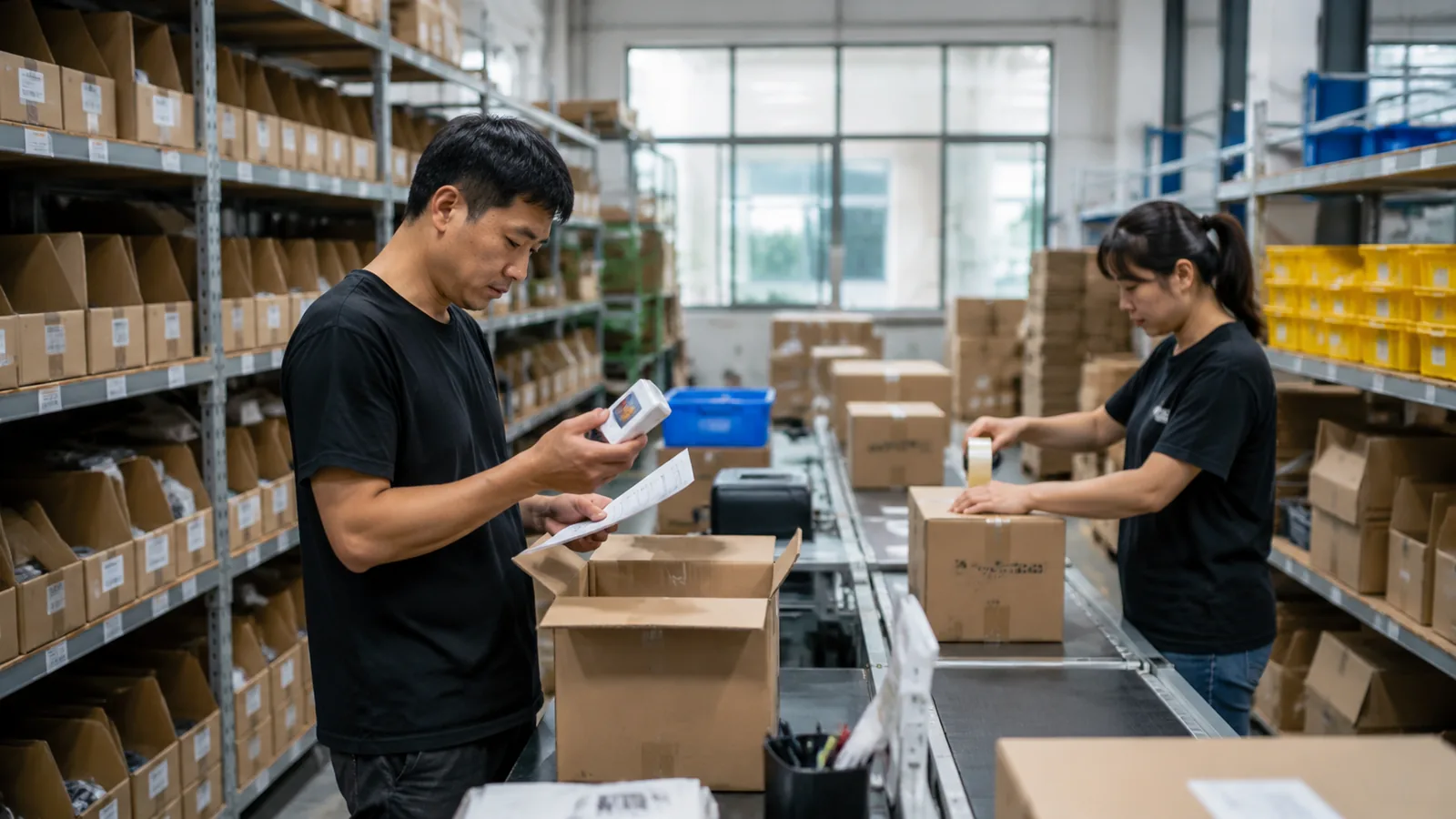
- Inbound receiving: the warehouse records the quantity, variants, and condition of incoming goods.
- Quality control: the team checks the agreed product details and documents defects before shipment.
- Storage and inventory management: accepted units are stored and matched to inventory records.
- Pick, pack, and dispatch: the warehouse prepares each order using the selected packaging and shipping line.
- Tracking and exception handling: tracking information returns to the store while the fulfillment team handles delays, address issues, and damaged parcels.
From supplier to customer
The system should connect to the seller's store or marketplace. It should import orders and send tracking details back to the store.
This matters more as daily order volume grows or the business adds sales channels.
What a China fulfillment solution should include
A fulfillment solution is more than shipping. It should cover the physical work, show clear stock data, and set clear service rules.
It should also explain who will help when an order goes wrong.
Supplier coordination and product sourcing
If a brand already has factories, the partner should receive goods from those suppliers and plan each delivery to the warehouse.
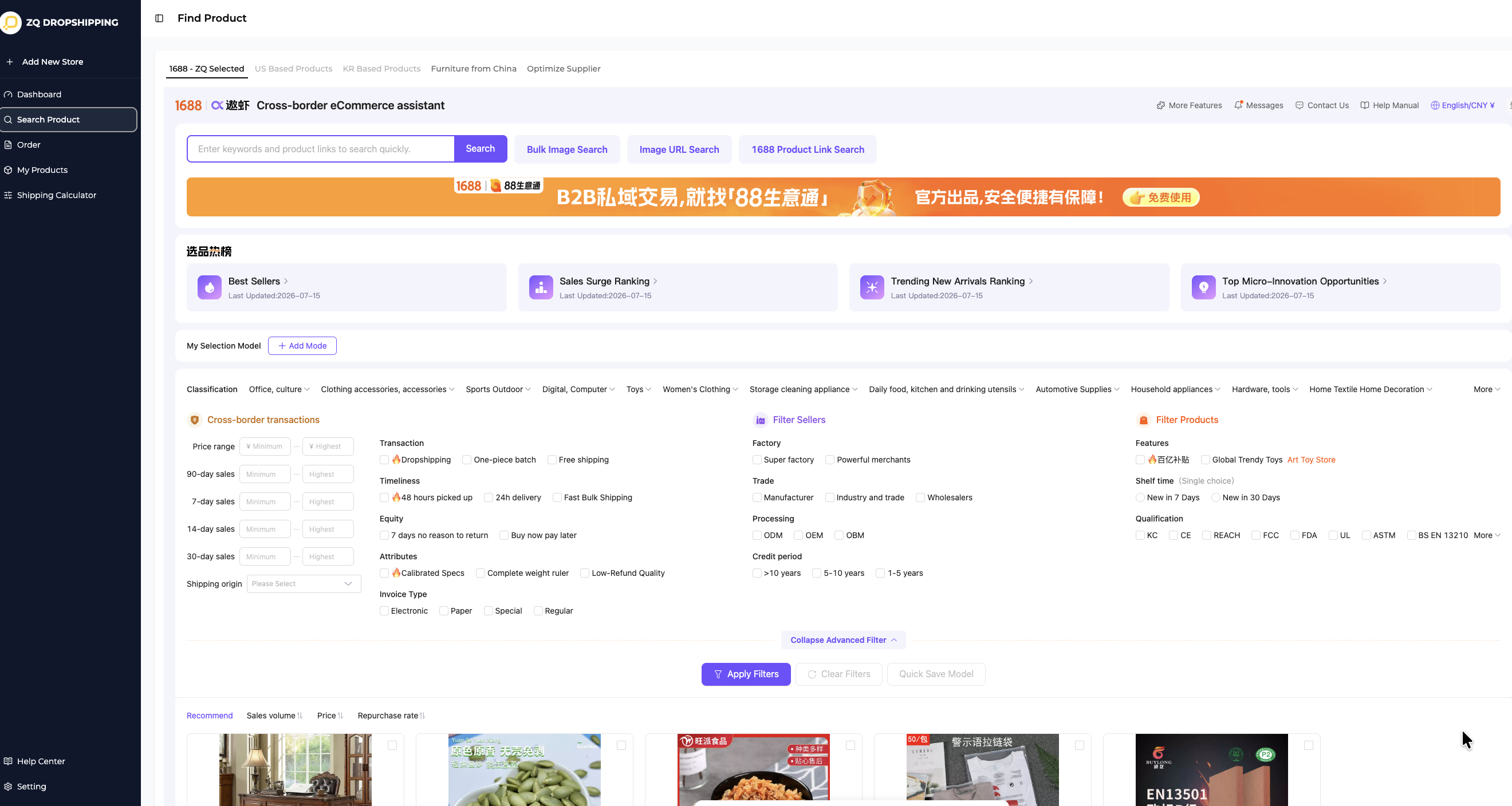
If the brand needs sourcing help, the partner may search Chinese marketplaces or contact factories directly.
1688 can be one sourcing channel, but it should not define the whole plan. Product details, supplier quality, order size, lead time, and return terms matter more than the marketplace name.
For a detailed introduction, see ZQ's 1688 dropshipping guide.
Inbound receiving and quality control
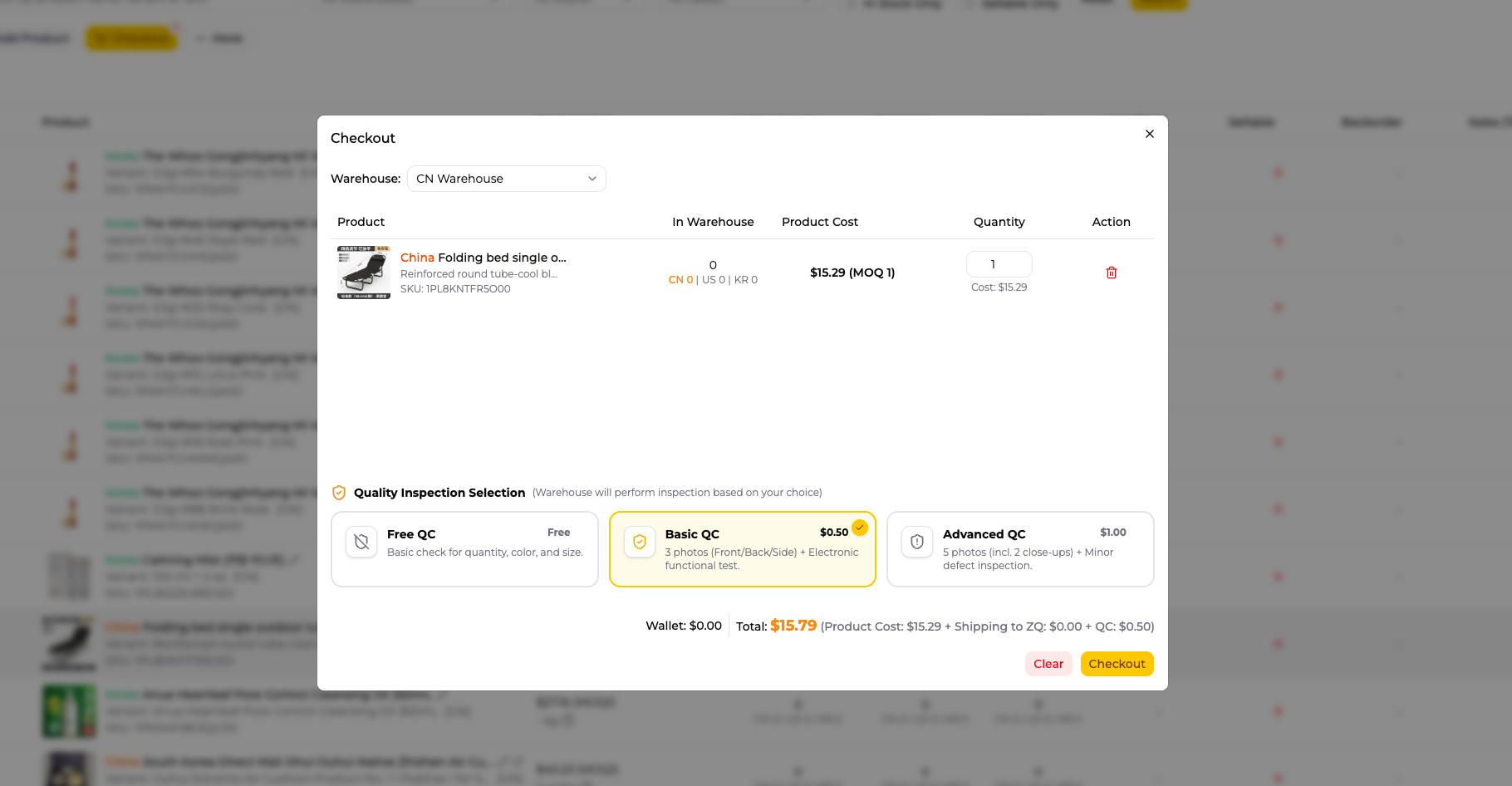
Set the quality check before the goods arrive. A basic check may confirm the number of units, color, size, and visible condition.
A deeper check may include photos, measurements, function tests, packaging checks, or a sample against an approved product.
Ask what happens when an item fails the check. Who records the problem? Can the supplier replace it? When does the seller need to approve the next step?
Inventory, packaging, and order processing
The warehouse should show stock by SKU and variant. It should record goods coming in and going out. It should also stop the store from selling stock that is not available.
Growing brands may also need kits, inserts, barcode labels, bundles, or custom packaging.
Custom packaging works best after a product has steady demand. Before you commit, compare the minimum order, storage needs, packing fees, and package size.
A larger box can raise the shipping cost. Read ZQ's guide to custom packaging for a closer look at the trade-offs.
Store integrations and tracking
A connected system should import orders, match product variants, send back tracking numbers, and show order status.
If a brand sells through several channels, the system must not sell the same stock twice.
China direct fulfillment vs. regional warehousing
Most online sellers do not need to use one model forever. The setup can change as a product moves from testing to steady demand.
Choose by product stage
| Fulfillment model | How it works | Best suited to | Main trade-off |
|---|---|---|---|
| Order-based purchasing | The partner buys or allocates a product after a customer orders. | Testing demand and reducing upfront inventory. | Supplier processing adds time before dispatch. |
| China warehouse stock | Inventory is held near Chinese suppliers and shipped internationally per order. | Stable products sold across several countries. | International transit remains part of every order. |
| Regional warehouse stock | Bulk inventory moves to a warehouse near the customer market. | Predictable bestsellers that need faster domestic delivery. | Requires forecasting, replenishment, and more working capital. |
| Hybrid fulfillment | Fast-moving items are pre-stocked while new or long-tail items ship from China. | Growing brands balancing speed and inventory risk. | Needs accurate routing and inventory visibility. |
Direct shipping from China makes it easier to serve several markets. A regional warehouse can speed up delivery for proven products.
A hybrid model uses both. It keeps stock risk low for slow sellers while giving bestsellers a faster route.
For more detail on international delivery methods and cost drivers, see Shipping From China for Dropshipping.
How much does China order fulfillment cost?
China order fulfillment has several costs. These may include the product, delivery to the warehouse, receiving, storage, packing, shipping, duties, taxes, and problem orders.
A low service fee does not always mean a low total cost.
Use a representative SKU and the purchase cost you already have. Give the fulfillment partner the destination, package size, and expected order volume.
Ask the partner to list only the fees it controls, such as receiving, product checks, storage, packing, and shipping. Do not expect a supplier to disclose its lowest price.
- Product or manufacturing cost
- Supplier-to-warehouse freight
- Receiving and inspection
- Storage and inventory handling
- Pick-and-pack or kitting
- Packaging materials and customization
- International or domestic shipping
- Duties, taxes, returns, and exceptional handling
How long does fulfillment from China take?
Total delivery time includes more than the carrier trip. It starts when the supplier prepares the goods or the warehouse sets stock aside.
Receiving, product checks, packing, export, customs, and local delivery all add time.
Ask the partner to separate handling time from transit time. A useful estimate should name the start point, destination, product type, and shipping service.
It should also say how customs, weekends, and peak seasons may affect the date.
Regional stock can support faster local delivery, but only when the goods are already in that market. Products sent from China will take longer.
Show customers the delivery estimate for the route used by each SKU.
How to choose the right China fulfillment partner
Do not choose a partner on shipping price alone. Test the full process.
The checks below show whether a partner can support the business as order volume grows.
- Define the operating model. Confirm whether the provider supports your own suppliers, sourcing assistance, pre-stocked inventory, or a hybrid of these options.
- Test the quote. Use one representative SKU, your current purchase cost, package details, and destination. Ask the fulfillment partner to itemize the fees it controls.
- Review the inspection standard. Confirm what is checked, how evidence is recorded, and what happens after a failed inspection.
- Check inventory visibility. Ask how stock, variants, bundles, and reserved units are recorded across channels.
- Compare shipping by route. Review delivery estimates, tracking quality, customs terms, restricted categories, and peak-season plans.
- Understand exception handling. Ask who manages lost parcels, address changes, returns, supplier disputes, and damaged goods.
- Run a pilot. Send a small batch or controlled set of orders before moving the full catalog.
Warning signs to investigate
- One all-in price without a clear fee breakdown
- Guaranteed delivery claims that do not define the route or processing time
- Quality control described without a written inspection scope
- No inventory history or SKU-level stock visibility
- Unclear responsibility for returns, customs issues, or damaged parcels
- Pressure to pre-stock large quantities before completing a pilot
How ZQ supports different fulfillment models
ZQ Dropshipping is a China-based fulfillment solution for online sellers that source products from China.
A seller can connect a store, use its own suppliers, or ask for sourcing help. It can also choose a product check and manage orders through one connected process.
The setup can change as the business grows. A new product can begin with single-order buying.
When demand becomes steady, the brand can store stock in China, add custom packaging, or move bestsellers to a regional warehouse. It does not need to buy stock for every product at the start.
ZQ also supports orders from several sales channels and offers regional warehouse options.
Routes, delivery terms, product checks, storage rules, and customs services depend on the product and destination. Confirm these details in a quote for your product.
Review ZQ's wider service coverage on the fulfillment services page or create a free account to discuss a setup for your products. Support depends on account level: Enterprise accounts receive 24/7 coverage, Advanced accounts have a dedicated group generally staffed from 08:00 to 24:00 China Standard Time, and Basic requests are handled within 24 hours. International orders fulfilled and shipped through ZQ have a 30-day after-sales request window from delivery.
Frequently asked questions
Do I need to buy inventory in advance?
Not always. Some fulfillment partners can support order-based purchasing, while others require products to be stocked before orders arrive. Pre-stocking usually makes sense after demand is predictable or when faster dispatch is a priority.
Can I use my own suppliers?
Yes, if the fulfillment partner accepts inbound goods from outside suppliers. Confirm receiving requirements, labeling rules, inspection instructions, and who coordinates shortages or defects with the supplier.
When should I use a regional warehouse?
Regional warehousing is most useful for proven SKUs with stable demand in one market. It can shorten delivery time, but it requires inventory forecasting, bulk replenishment, and enough margin to cover additional storage and handling.
Can a China fulfillment partner use custom packaging?
Many providers offer custom mailers, boxes, inserts, labels, or bundle assembly. Ask about minimum quantities, setup costs, storage, packing labor, production lead time, and the effect of packaging size on shipping cost.
How should returns be handled?
The return process should be agreed before launch. Confirm the return address, inspection rules, refund evidence, restocking conditions, disposal costs, and whether international returns are economical for the product.
What should I confirm before sending my first batch?
Confirm the inbound address, carton labels, product details, inspection rules, storage fees, order cut-off time, shipping routes, tracking process, and who handles damaged or missing items. A small pilot batch helps you test these steps before moving the full catalog.
A good partner should make costs, stock, product checks, and delivery duties easy to understand.
Start with one real SKU and one destination. Test the process before you scale.
Key Numbers on China Order Fulfillment
| Fact | Figure | Source | Verified |
|---|---|---|---|
| China marketplaces sourceable through ZQ | 40+ (1688, Taobao, Weidian, Alibaba and more) | zqsolution.com services pages | 2026-08-21 |
| Orders fulfilled by ZQ | Tens of thousands | zqsolution.com about-us | 2026-08-21 |
| Countries served | 100+ | zqsolution.com homepage | 2026-08-21 |
| Overseas warehouses | US + EU (Netherlands) | zqsolution.com services pages | 2026-08-21 |
| Quality control | Per-item inspection with photos/video | zqsolution.com quality-inspection service | 2026-08-21 |
| International-order after-sales request window | 30 days from delivery | zqsolution.com refund policy | 2026-08-21 |
Frequently Asked Questions
What is China order fulfillment, in one sentence?
A partner in China receives your goods from suppliers, checks and stores them, then packs and ships each order to your overseas customer — so the supply-chain work happens close to the source while your customer gets a normal local-style delivery.
How is China fulfillment different from using a US warehouse?
China fulfillment keeps inventory near the factory: lower storage cost, no bulk freight commitment, and per-order flexibility. A US warehouse puts stock near the customer: faster delivery at local rates, but you commit capital to inventory. Most growing stores end up hybrid — China fulfillment for the long tail, US/EU stock for proven winners.
What does China order fulfillment cost?
Costs are per-order and depend on weight, destination, and services (inspection, branding, storage days), so there is no honest flat rate. What to demand from any provider: a quoted per-order price that bundles picking, packing, and the shipping line, so your margin math is exact.
How do I know my products were actually checked before shipping?
Ask for evidence, not assurance: per-item inspection with photos or video of your actual goods. This is a standard, requestable step — if a provider can't show it, assume it isn't happening.
When should I switch from China fulfillment to overseas warehouses?
When a SKU shows stable sales velocity (a month or more of consistent orders, not one good weekend), healthy margin after bulk freight and storage, and a low defect rate from inspection data. Fewer than those three signals: stay on China fulfillment.