
EU €3 Small-Parcel Duty in 2026: Direct Shipping vs a Netherlands Warehouse

What changed for low-value parcels entering the EU in 2026?
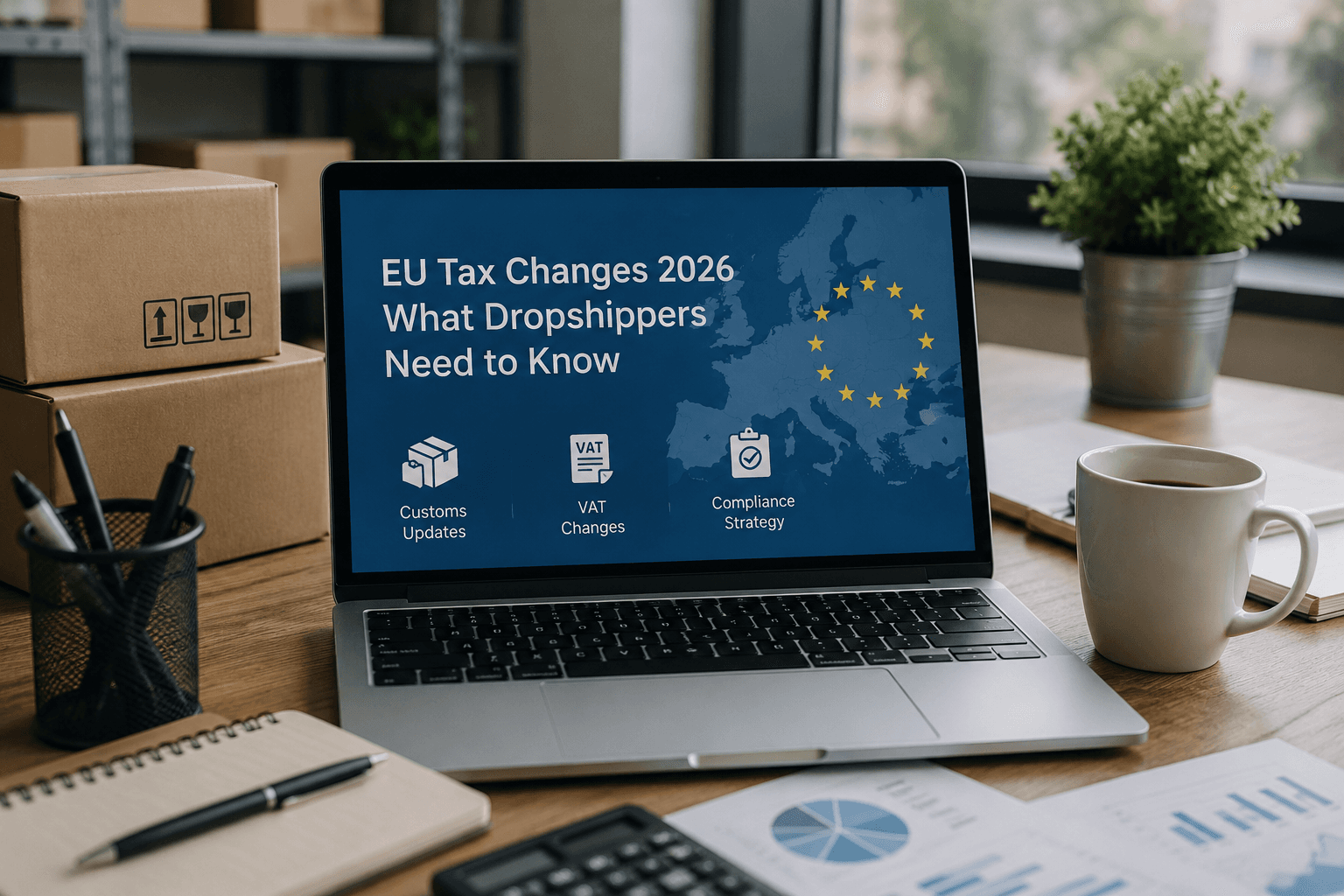
From July 1, 2026, the EU applies a temporary €3 customs duty to each tariff category contained in an e-commerce consignment valued at up to €150. The measure is scheduled to run until July 1, 2028, when the permanent customs-duty system is expected to take over. VAT and carrier clearance or handling charges are separate from this €3 duty.
The rule matters most to sellers who send each customer order as a separate parcel from China, Korea, the UK, or another non-EU country. A parcel containing goods under two tariff headings can attract two €3 charges. A parcel containing several units under one tariff heading normally has one €3 category charge, subject to the customs declaration and the official rules.
The European Commission states that the temporary measure covers low-value distance-sale consignments regardless of whether VAT is handled through IOSS, Special Arrangements, or the standard VAT process. It is therefore inaccurate to describe the charge as an IOSS-only fee.
How large is the change in actual shipping behavior?
Dutch Customs reported that low-value e-commerce declarations in July and August 2026 were 46% lower than the average for the first six months of 2026. The authority said more goods appeared to be entering the Netherlands in larger combined shipments. Dutch Customs also reported approximately €35 million in revenue from the new duty in July 2026.
This is not a small niche flow. The European Commission counted close to 5.9 billion low-value e-commerce items entering the EU in 2025, up 26% from 2024. The economics of one-parcel-at-a-time importing have therefore changed at scale.
“More companies appear to be opting for bulk imports and storage within the EU.”
| Independent source | Reported evidence | What it means for sellers |
|---|---|---|
| Dutch Customs | July–August e-commerce declarations fell 46%; declaration lines fell 70%; standard declarations rose 20% | The market is shifting away from one imported parcel per consumer order toward larger combined entries |
| European Commission | Low-value imports reached almost 5.9 billion items in 2025, up 26% year over year | The €3 rule affects a large, fast-growing parcel flow rather than a niche shipping method |
| Council of the EU | The temporary duty applies from July 1, 2026 to July 1, 2028 to each tariff category in a low-value parcel | A multi-category consumer parcel can incur more than one €3 charge |
These sources document a change in import behavior. They do not prove that every seller should hold EU inventory, or that every bulk shipment will cost less.
Why does small-batch consolidation fit uncertain EU demand?
ZQ's small-batch consolidation and Delft warehouse model is designed for sellers who have repeat European orders but cannot forecast enough demand to justify large inventory. The seller does not need to move the entire catalog or fill a container. ZQ can receive several suppliers and SKUs in Shenzhen, inspect and consolidate a modest replenishment batch, move the batch to Delft, and fulfill local orders from that stock.
The model separates products by demand stage:
| Demand stage | Recommended flow | Inventory exposure |
|---|---|---|
| New or unproven SKU | Continue direct shipping from China | No advance EU stock |
| Repeat-selling SKU with uncertain volume | Send a small consolidated batch to Delft | Limited stock based on supported demand |
| Stable high-volume SKU | Use larger scheduled replenishments | More stock, lower replenishment frequency |
This hybrid structure addresses two risks at once: direct-parcel logistics costs can rise quickly under the new EU rules, while importing too much inventory creates dead-stock and storage risk. The decision should still be made by SKU using packed dimensions, destination mix, expected sales speed, return rate, and full landed cost.
Does an EU warehouse remove customs duty and VAT?
No. An EU warehouse changes when and how goods are imported; it does not make import duty, import VAT, product compliance, or seller tax obligations disappear.
With direct shipping, each consumer parcel crosses the EU border and is declared as a low-value e-commerce consignment. With an EU warehouse model, stock is imported in a consolidated commercial shipment first. Normal customs duty and import VAT are handled at that import stage according to the goods, declared value, origin, route, and importer setup. Orders dispatched later from inventory already in free circulation move as intra-EU shipments and do not incur the temporary €3 low-value import duty again at the consumer-parcel stage.
ZQ Solution is not a customs broker and does not present itself as the seller's Importer of Record. International freight, import clearance, DDP arrangements, and tax handling are performed by qualified logistics partners according to the selected route and the buyer's legal and tax setup. Tax-inclusive routes may be available, but the seller must confirm its own VAT, EPR, product-safety, and importer responsibilities with a qualified adviser.
Direct shipping, consolidated clearance, or Delft stock: which model fits?
| Fulfillment model | Best fit | EU border event | Main advantage | Main risk |
|---|---|---|---|---|
| Direct small-parcel shipping | New or unpredictable SKUs | Every customer parcel is imported | No advance stock commitment | €3 per tariff category, VAT, clearance cost, and longer cross-border delivery |
| Consolidated B2B2C line | Repeat orders that can move together | Orders enter in one commercial movement, then split | Better line-haul efficiency without holding long-term stock | Extra consolidation and deconsolidation time; route and importer setup must be verified |
| ZQ Delft warehouse | Proven EU demand and repeat-selling SKUs | Bulk inventory is imported before sale fulfillment | Local dispatch, local returns, and no repeated low-value import event per consumer order | Inventory, storage, VAT, EPR, and forecasting responsibility |
| Hybrid model | Sellers testing many SKUs with a few winners | Test products ship direct; proven products move in bulk | Preserves testing flexibility while moving repeat volume to local stock | Requires SKU-level routing and stock rules |
The choice should be made by SKU, not by company. Direct shipping can remain sensible for low-volume tests. Delft stock becomes more attractive when the same product sells repeatedly in Germany, France, Spain, Italy, the Netherlands, or another supported European destination.
What does the ZQ China-to-Delft workflow include?
ZQ Solution can receive products from multiple Chinese suppliers at its Shenzhen warehouse, check quantities and visible condition, label or repackage goods to the seller's approved instructions, consolidate cartons, and provide packing data for the international shipment. Stock can then move to Delft by sea, air, or rail through the selected logistics route.
After inventory is received in Delft, ZQ can fulfill connected Amazon, TikTok Shop, and TEMU orders, replenish Amazon FBA, dispatch local carrier parcels, receive returns, and carry out agreed inspection or relabeling work. Complete standard orders pushed before 12:00 local European time can dispatch the same working day in the regular season. Peak-season processing adds up to 24 hours. Carrier transit and platform receiving time are separate.
Read the operational details in the ZQ Delft warehouse fulfillment guide.
Real example: 100 sunglasses shipped to Germany
ZQ compared direct shipping from China with pre-positioning 100 units at the Delft warehouse. Each pair of sunglasses weighs approximately 350 g in its soft case. The 100-unit headhaul is treated as one 35 kg actual-weight carton.
| Cost item | Direct from China | Bulk to Delft, then Germany |
|---|---|---|
| International or local delivery basis | $10.80 per customer order | $85 headhaul for 100 units, or $0.85 per unit |
| Tax-inclusive headhaul adjustment | Included in direct quote basis | About $10 per 100 units, or $0.10 per unit |
| Delft receiving, putaway, first-30-day storage, order handling, and Germany base delivery | Not applicable | About $7.09 per order using the published September 2026 assumptions |
| Estimated total for 100 orders | $1,080.00 | $803.95 |
| Estimated difference | — | $276.05 lower, or 25.6% |
The Delft estimate is $8.04 per fulfilled order under the stated assumptions. It is an example, not a universal quote. Energy surcharges, tolls, remote-area fees, extra storage, packing materials, returns, product cost, and special compliance work can change the result. See the full Netherlands 3PL vs direct shipping cost calculation.
How do VAT and IOSS differ between the two models?
IOSS is designed for distance sales of imported goods in consignments not exceeding €150. It allows VAT to be collected at checkout and reported through one IOSS registration. IOSS does not remove the temporary €3 customs duty.
Goods already stored in an EU warehouse are not IOSS shipments. Sales dispatched from Delft to consumers in other EU countries are generally intra-EU distance sales. Depending on the seller's establishment, inventory ownership, marketplace role, and VAT registrations, the Union OSS may help report destination-country VAT. Holding stock in the Netherlands can also create Dutch VAT and reporting obligations. The warehouse location does not decide this by itself; the seller's legal and transaction structure does.
What should an EU seller calculate before moving stock to Delft?
Use one SKU and compare the same sales period under both models. Include:
- Product cost and supplier domestic freight to Shenzhen.
- China warehouse receiving, inspection, labeling, and consolidation.
- Bulk headhaul, import duty, import VAT, and clearance charges.
- Delft unloading, putaway, storage, order handling, packaging, and last-mile delivery.
- Expected return rate and the resale value of inspected returns.
- VAT, EPR, GPSR, and marketplace compliance costs.
- Dead-stock risk if demand falls before inventory sells.
A Netherlands warehouse works best when the landed local-fulfillment cost plus inventory risk is lower than the repeated cost and friction of direct import parcels.
Frequently Asked Questions
Is the €3 charge applied per parcel, per product, or per kilogram?
The official rule applies €3 to each different item category according to its tariff heading within a low-value consignment. It is not a per-kilogram charge. Several units under one tariff category and several different tariff categories are not the same customs case.
Does IOSS remove the €3 customs duty?
No. IOSS is a VAT reporting mechanism. The temporary €3 customs duty and VAT are separate.
Does shipping from Delft avoid the €3 low-value parcel duty?
Orders dispatched from goods already imported into free circulation in the EU do not cross the external EU border as low-value consumer imports again. The earlier bulk import still has customs, VAT, documentation, and importer requirements.
Should every SKU move to the Netherlands?
No. Keep uncertain and low-volume products in a direct-shipping test flow. Move proven, repeat-selling SKUs when the full landed cost and stock risk support local inventory.
Can ZQ act as my customs broker or Importer of Record?
ZQ coordinates the supply-chain and warehouse workflow but does not present itself as a customs broker. Clearance, DDP, and tax services depend on the selected logistics partner, route, and buyer qualifications. Confirm the Importer of Record before goods leave origin.
Official sources
- European Commission: temporary flat duty on low-value imports from July 1, 2026
- Council of the EU: final green light for the €3 small-parcel duty
- Dutch Customs: declarations fell after the €3 duty began
- European Commission: low-value e-commerce import volumes
- European Commission: One Stop Shop and Import One Stop Shop